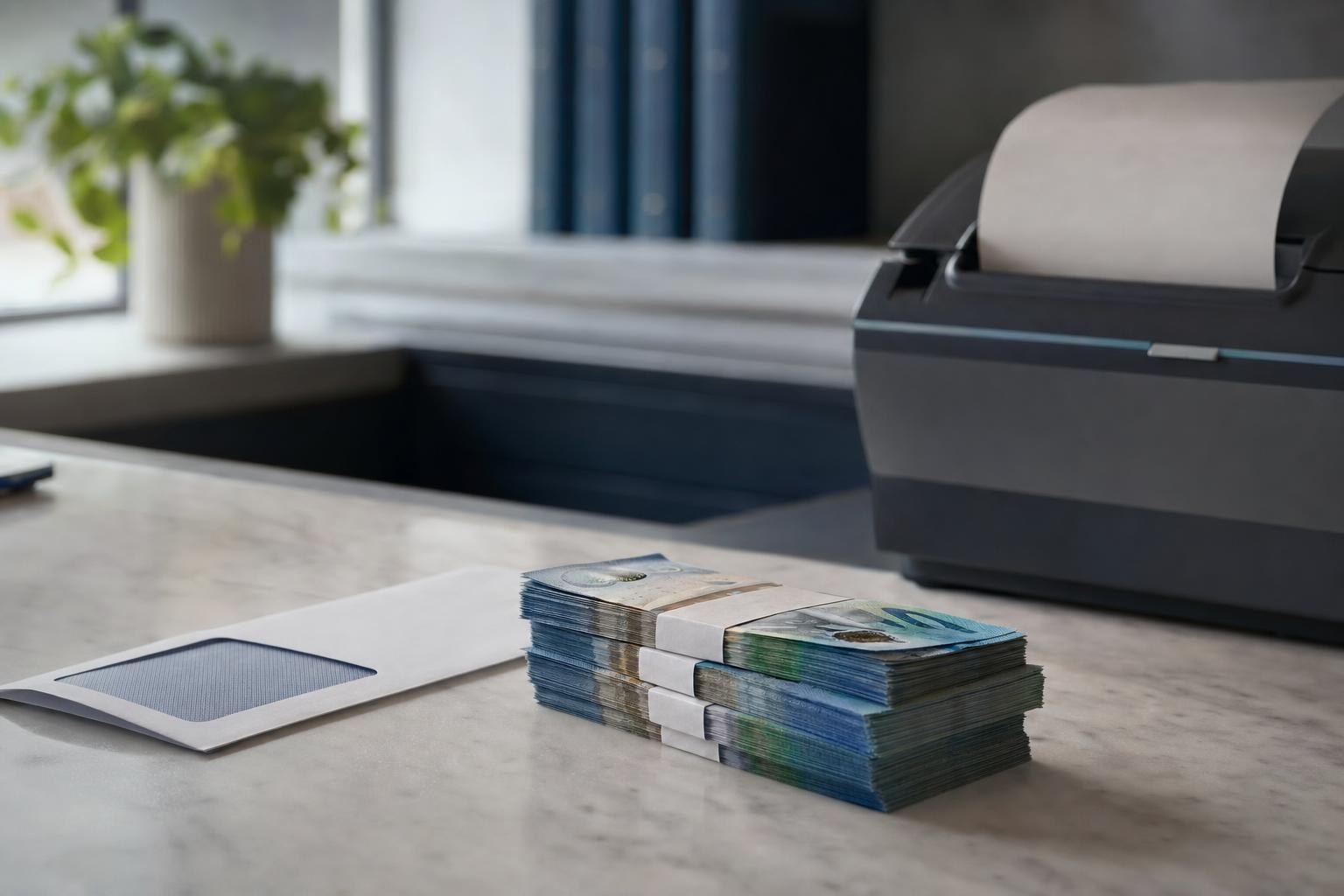
A threshold transaction report is due within 10 business days when a law firm or conveyancer receives or pays physical currency (notes and coins) of AU$10,000 or more, or the foreign equivalent, as part of a designated service, typically cash into trust for a settlement. Bank transfers, bank cheques and card payments never count. Several cash payments kept just under the threshold are not a TTR but are a classic reason for a suspicious matter report. Most small firms refuse cash at this level and say so in their program.
- Physical cash only; transfers, PayID, BPAY, cheques and cards are never threshold transactions.
- Lodge through AUSTRAC Online within 10 business days; keep the record for seven years.
- Structuring to stay under AU$10,000 is itself a red flag for an SMR.
What triggers it
- Notes and coins only. Transfers, cheques and cards do not.
- AU$10,000 or more in one transaction. Several smaller cash payments that seem designed to stay under the threshold are not a TTR but are a reason for a suspicious matter report.
- Received in connection with a designated service, typically into trust.
What to record
- Date, amount, currency.
- Who paid it, with identification.
- The matter.
- Who at the firm handled it.
The simplest policy
Do not accept cash of AU$10,000 or more, say so in your program, and never lodge a TTR.
Do I need to lodge a threshold transaction report?
The AU$10,000 rule is narrower than most people think. Check a payment in ten seconds.
General information about the AML/CTF Act and Rules, not legal advice. Many small firms simply decline cash at this level and say so in their program.
Questions people ask
- A client pays fees of AU$12,000 in cash. TTR?
- Your own fees are not a designated service, so the TTR duty does not attach in the same way, but large cash fees are a risk indicator worth recording and structuring is a reason for an SMR. Check AUSTRAC guidance.
- Does a bank transfer into trust of more than AU$10,000 need a report?
- No. Threshold transaction reports cover physical currency only. Transfers, bank cheques and cards are never threshold transactions, whatever the amount.
- What if a client pays AU$6,000 in cash twice in a week?
- Neither payment is a threshold transaction, but a pattern designed to stay under AU$10,000 is structuring, an offence for the client and a red flag for you: consider a suspicious matter report within 3 business days.
Read next
- AML/CTF and the law firm trust accountManaging client money is a designated service. What that adds to the trust account rules you already follow.
- Suspicious matter reports for lawyers and conveyancersWhen to report, the 3-business-day deadline, the red flags in property and business transactions, legal professional privilege and the tipping-off rule.
- AML red flags for lawyers and conveyancersThe money laundering red flags lawyers and conveyancers are expected to notice: in the client, the funds, the structure, the instructions, the deal.
The regime in general, with tools and infographics, on our sister site amlctfguide.com.au.
Sources
Official pages this page was checked against. The date is when we captured the page; the publisher may have updated it since.
- Threshold transaction reports · AUSTRAC, captured 07 June 2026
This guide is general information for solicitors, conveyancers, settlement agents, not legal advice. Check AUSTRAC's current guidance for your situation.